Folk Schools: Summer Experiences Worth Knowing About
As the school year winds down and summer stretches ahead, I keep thinking about a particular kind of learning community that doesn't get nearly enough attention: folk schools. And for students ready to step away from screens, grades, and performance pressure, they may be one of the most quietly compelling summer experiences out there.
The folk school concept has roots in 19th-century Denmark, where philosopher and educator N.F.S. Grundtvig envisioned a different kind of learning — one that brought dignity to ordinary people, connected learning to lived experience, and built community rather than sorted individuals by achievement. His guiding phrase was "schools for life." No exams. No grades. Just genuine engagement with knowledge and craft.
That philosophy later traveled to the United States and today 100 folk schools operate across the country, offering instruction in traditional crafts, practical skills, and cultural arts — often in deeply regional, deeply human ways.
What's striking about the folk school movement in America is how rooted each school is in its own place and community. The course offerings at a folk school are typically shaped by the cultural traditions of the surrounding region — which means no two folk schools look quite alike. You might find Black Ash basket weaving taught by an Indigenous instructor in Minnesota, Appalachian broom making in North Carolina, or Nordic cooking classes in Iowa, where Scandinavian immigrant traditions run deep. Some schools focus on sustainability and homesteading skills. Others center on visual art, music, or fiber arts. What they share is a commitment to learning that is non-competitive, hands-on, and community-oriented — open to all ages, all backgrounds, and all levels of experience.
Here are a few worth knowing about:
John C. Campbell Folk School in Brasstown, North Carolina is the oldest and largest folk school in the country, founded in 1925. Its more than 800 course offerings span craft, music, dance, cooking, gardening, and storytelling — with lodging on campus and community events woven throughout.
North House Folk School in Grand Marais, Minnesota sits on the shores of Lake Superior and draws students into the traditional crafts and skills of the North — from boat building and timber framing to natural dyeing and Nordic cooking. With over 200 courses and summer youth camps available, it's one of the most accessible and evocative folk schools in the country.
Peters Valley School of Craft in the Delaware Water Gap, New Jersey, offers workshops from May through September across disciplines including blacksmithing, ceramics, fiber arts, fine metals, photography, and woodworking — for beginners and experienced makers alike.
Penland School of Craft in the North Carolina mountains has been a destination for serious makers since 1929. Known for its immersive studio residencies and intensive workshops, it offers instruction across a wide range of disciplines — glass, iron, clay, wood, fiber, and more — in a setting that feels deliberately removed from the pace of everyday life.
Arrowmont School of Arts and Crafts in Gatlinburg, Tennessee offers year-round visual arts and craft programs rooted in Appalachian tradition alongside contemporary fine art. Weekend intensives, community classes, and an artist-in-residence program make it a rich and accessible option for learners at any level.
The Clearing Folk School in Ellison Bay, Wisconsin is directly inspired by the Danish folk school movement and set on the scenic Door Peninsula. Classes in the arts, nature, and humanities are often held outdoors or in intimate studio spaces, making the natural environment as much a part of the experience as the curriculum.
Old Town School of Folk Music in Chicago has been teaching folk music, dance, and art since 1957 and is the largest nonprofit community arts school in the country. It sits a little differently from the others — urban, music-centered, and large in scale — but its spirit is unmistakably folk: community-driven, tradition-rooted, and free of any pressure to perform.
And, of course, there's Denmark
The folk school tradition is still very much alive in Denmark, and some of those schools actively welcome international students for summer and gap year programs.
The International People's College (IPC) in Helsingør — just north of Copenhagen — is the most internationally focused folk high school in Denmark, with courses taught entirely in English and students arriving from all over the world. Short summer courses run just a few weeks, while longer programs extend to four to six months, making IPC a compelling option for gap year students seeking something genuinely different. Students live on campus together, share meals, attend classes, and — in true folk school fashion — are asked to show up without the pressure of grades or exams.
Vrå Folk High School is another Danish school welcoming international students, with a strong focus on creative arts, music production, and collaborative living. Both schools reflect the core Grundtvigian ideal: that education should challenge the mind, the heart, and the social self — all at once.
A Summer Experience With a Lasting Impact
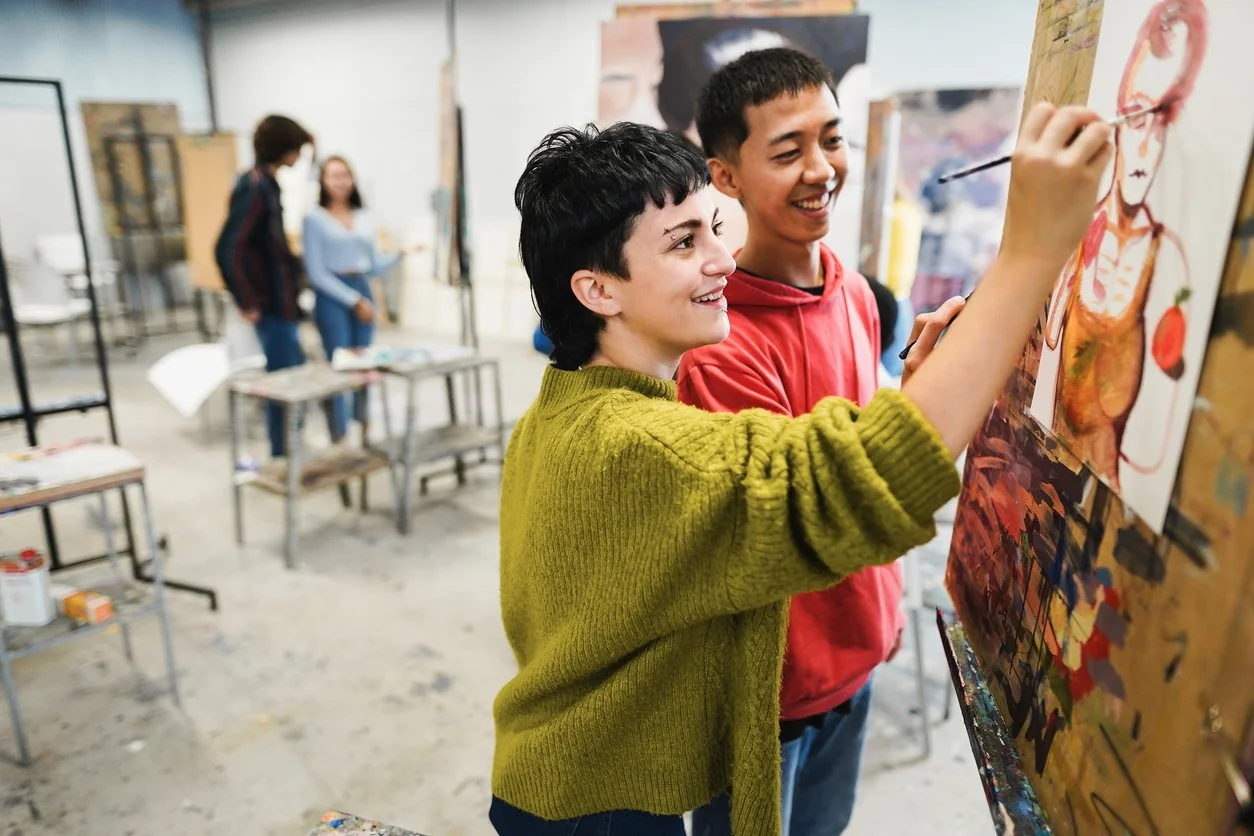
In a world where students are focused on academic preparation, college positioning, and a digital life that rarely slows down, folk schools offer something increasingly rare — the chance to step away from all of that and learn something with their hands, their whole selves, and other human beings in the same room.
Working through a physical craft builds patience and persistence in ways that a screen simply cannot replicate. Learning in a non-competitive environment builds confidence and soft skills that complement the academic journey students will return to. Sitting alongside adults who are also beginners — who are also figuring something out — shifts a student's relationship to not-yet-knowing in ways that stay with them long after the summer ends.
Folk schools quietly offer something else entirely: the chance to slow down, make something, and remember what it feels like to simply learn. That, to me, is an experience worth knowing about.
To explore folk schools near you, the Folk School Alliance and Craftsmanship Magazine both maintain searchable directories. For Danish folk high schools welcoming international students, visit the International People's College at ipc.dk or explore the full directory at danishfolkhighschools.com.